Introduction (Real-Life Problem)
A car accident is already stressful — but what frustrates most vehicle owners in Pakistan is what happens after filing an insurance claim.
You take your damaged car to the workshop, the repair estimate is prepared, and you expect your insurance company to cover the cost. But when the final claim is processed, you are told that you must pay a significant portion of the repair expenses yourself.
Why?
Because of something called depreciation.
Standard comprehensive car insurance policies consider depreciation while settling claims. This means the insurer deducts the reduced value of parts such as plastic components, rubber parts, fiber panels, and metal items based on the vehicle’s age.
This is where Zero Depreciation Car Insurance becomes important.
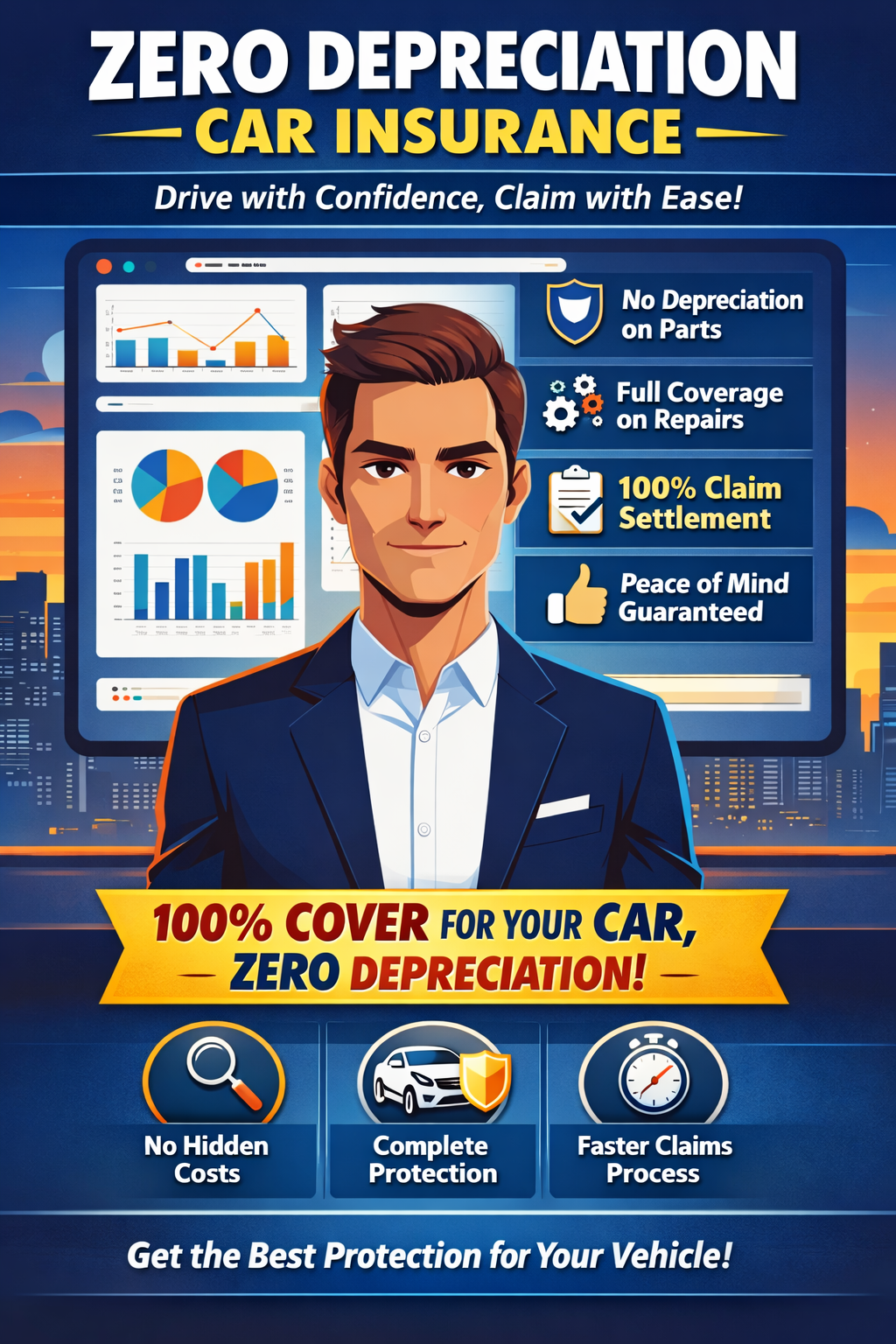
Zero depreciation cover (also known as bumper-to-bumper cover) ensures that your insurance claim is settled without applying depreciation on replaced parts. In simple words, you receive a higher claim amount and pay less from your own pocket after an accident.
How Comprehensive Car Insurance Works
A comprehensive car insurance policy provides financial protection against damage to your own vehicle as well as third-party liabilities.
It typically includes:
- Accidental damage
- Fire damage
- Theft
- Natural disasters (if included in policy)
- Third-party liability
However, when your car gets repaired after an accident, the insurance company does not pay the full cost of replacement parts. Instead, they apply depreciation based on the type and age of parts being replaced.
For example:
- Plastic parts may have up to 50% depreciation
- Rubber components may also face heavy deductions
- Fiber parts often have high depreciation rates
This means that even with insurance, you may have to pay thousands of rupees from your own pocket during repairs.
Zero depreciation cover eliminates these deductions, ensuring that you get maximum claim settlement.
Who Should Buy It?
Zero depreciation car insurance is especially useful for:
- New car owners
- Owners of vehicles less than five years old
- People who drive frequently in urban areas
- Drivers who park their cars in public places
- Individuals who want minimal out-of-pocket repair costs
- Owners of expensive vehicles with costly spare parts
If you want peace of mind and higher financial protection after an accident, this add-on can be extremely beneficial.
Benefits
Choosing zero depreciation cover offers several advantages:
- Higher claim settlement without depreciation deductions
- Lower personal expenses during repairs
- Financial protection for expensive vehicle parts
- Better coverage for plastic and fiber components
- Peace of mind during claim processing
This cover ensures that you receive compensation closer to the actual cost of new parts used in repairs.
Limitations
While zero depreciation cover provides strong protection, there are some limitations:
- It increases the overall insurance premium
- Usually available for vehicles up to a certain age
- May have a limited number of claims per year
- Does not cover mechanical breakdowns
- Excludes damages caused by negligence or drunk driving
Always review policy terms before selecting this add-on.
Estimated Cost in Pakistan
Zero depreciation cover is offered as an optional add-on to comprehensive insurance policies.
In Pakistan, it may increase your premium by approximately:
- 10% to 25% for small vehicles
- 15% to 30% for mid-range sedans
- 20% to 35% for luxury vehicles
The exact cost depends on:
- Vehicle make and model
- Manufacturing year
- IDV (Insured Declared Value)
- City of registration
- Insurer’s policy terms
Factors That Affect Premium
Premium for zero depreciation insurance depends on:
- Vehicle age
- Car model
- Engine capacity
- Claim history
- Location of usage
- Security features
- Selected IDV
- Policy add-ons
Newer vehicles generally have lower premiums for this add-on compared to older cars.
Real Example Scenario
Suppose your car is involved in an accident and the repair estimate is PKR 120,000.
Without Zero Depreciation Cover:
The insurer applies depreciation on plastic and rubber parts and approves only PKR 80,000.
You pay PKR 40,000 from your own pocket.
With Zero Depreciation Cover:
Depreciation is not applied, and the insurer may approve the full PKR 120,000 (subject to deductible).
This results in significant savings for the policyholder.
Tips Before Buying
Before selecting zero depreciation cover, consider the following:
- Check your car’s age eligibility
- Compare premium differences with and without add-on
- Review the number of allowed claims per year
- Understand deductible charges
- Confirm included and excluded parts
- Read policy wording carefully
This will help you make an informed decision and avoid claim surprises later.
FAQs
What is zero depreciation insurance?
It is an add-on that prevents depreciation deductions on replaced parts during claim settlement.
Is it suitable for older cars?
It is usually recommended for newer vehicles.
Does it increase premium?
Yes, but it reduces out-of-pocket expenses during repairs.
Is it mandatory?
No, it is an optional add-on.
Does it cover engine damage?
Only if engine protection add-on is selected.
Conclusion
Zero depreciation car insurance is a valuable add-on for vehicle owners who want maximum financial protection after an accident. While it increases the insurance premium slightly, it can save a significant amount during claim settlement by eliminating depreciation deductions.
For drivers who want peace of mind and reduced repair costs, this cover can be a smart investment — especially for new or high-value vehicles.
Author Bio
Ali Raza is an automotive insurance content specialist with extensive experience in analyzing motor insurance policies in Pakistan. He focuses on helping vehicle owners understand insurance coverage and make better financial decisions.
Sources / References
Motor Insurance Policy Documents from General Insurance Providers in Pakistan
Securities and Exchange Commission of Pakistan (SECP) – Insurance Guidelines
State Bank of Pakistan – Consumer Financing Regulations
Author

abdulaleemabdul1122@gmail.com
Related Posts

What Is Insured Declared Value (IDV) in Car Insurance?
What Is Insured Declared Value (IDV) in Car Insurance? Introduction (Real Problem-Based) In Pakistan, many car owners purchase insurance just to meet...
Read out all
Basic Terms Used in Motor Insurance Policies (Pakistan Context)
How Car Insurance Premium Is Calculated in Pakistan Introduction (Real Problem Based) Aksar jab vehicle owners Pakistan me car insurance ke liye...
Read out all
What Happens After Filing a Car Insurance Claim in Pakistan?
Introduction: The Waiting Period That Confuses Most Policyholders Filing a car insurance claim after an accident often brings a sense of relief...
Read out all
How Car Insurance Survey Process Works in Pakistan
Introduction: The Most Important Step That Decides Your Claim Many vehicle owners in Pakistan believe that filing an insurance claim is just...
Read out all
Steps to Renew Car Insurance Policy in Pakistan
Introduction: The One Task That Can Save You From Major Financial Loss Car insurance renewal is often treated as a routine yearly...
Read out all
Documents Required for Filing Car Insurance Claims in Pakistan
Introduction: The Real Problem That Delays Most Insurance Claims You’ve just been in a road accident. Your car’s front bumper is damaged,...
Read out all