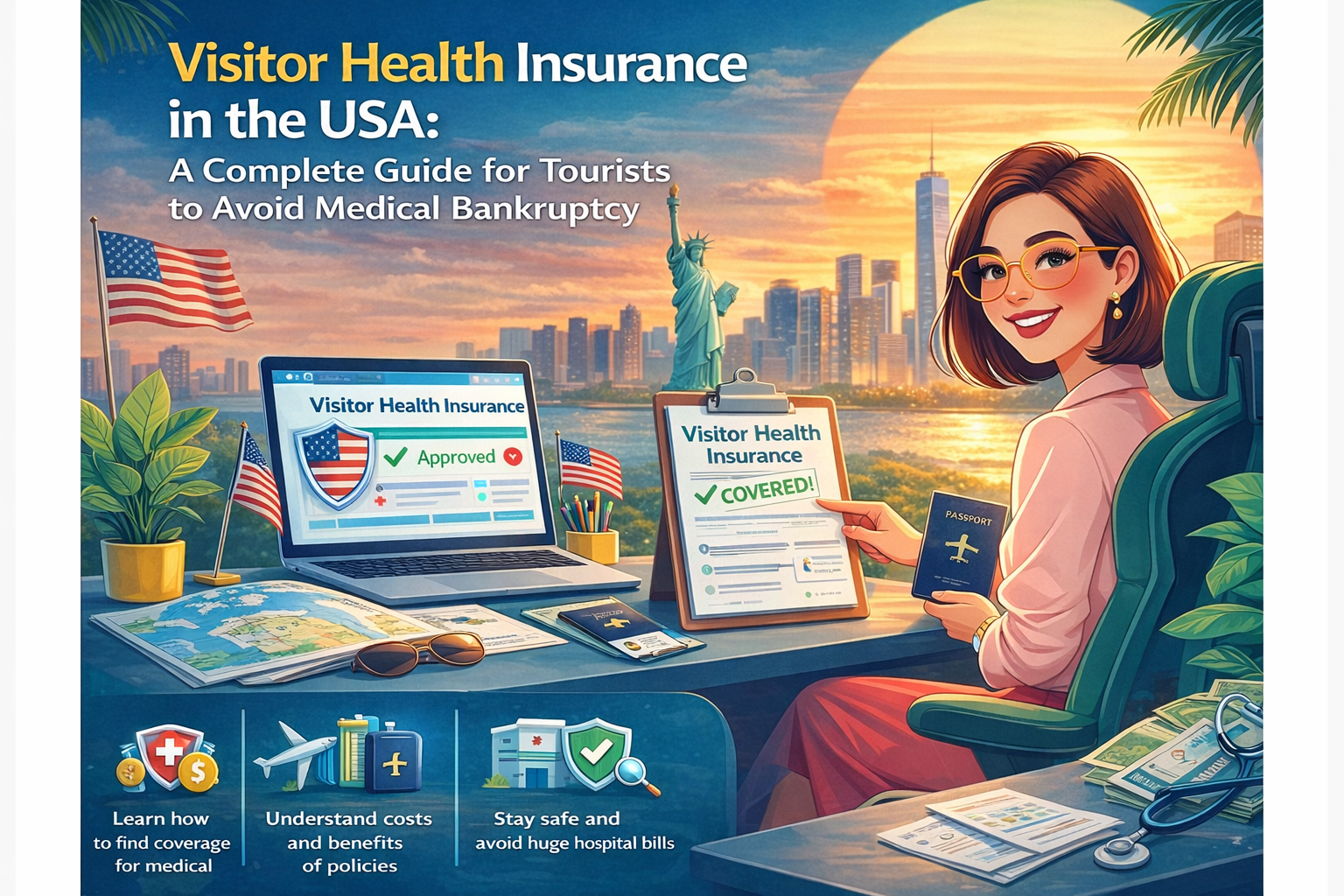
Planning a trip to the United States is exciting. From exploring world-famous cities like New York and Los Angeles to visiting family members or attending business conferences, millions of people travel to the U.S. every year for different purposes.
However, one critical aspect that many international visitors ignore while planning their trip is healthcare protection.
Unlike many countries where healthcare services are either subsidized or publicly funded, the United States has one of the most expensive healthcare systems in the world. Even minor medical treatment can result in thousands of dollars in hospital bills.
Imagine experiencing severe food poisoning during your trip or slipping on wet stairs at a shopping mall and breaking your arm. Without insurance coverage, a simple emergency room visit could cost more than your entire travel budget.
This is exactly where visitor health insurance becomes essential.
The Reality of Medical Costs for Visitors in the United States
Healthcare costs in the U.S. are significantly higher compared to most countries. Tourists and short-term visitors are usually required to pay medical expenses upfront before receiving treatment.
For instance:
- Emergency room visit: $1,500 to $3,000
- Ambulance services: $800 to $2,500
- MRI scan: $1,200 to $4,000
- Minor surgery: $5,000 to $15,000
- Hospital stay per day: $8,000 to $12,000
In many cases, hospitals may require a deposit before admitting patients for treatment.
Visitors often assume that their domestic insurance policies will cover overseas medical expenses. Unfortunately, most local insurance providers do not extend coverage internationally.
Without visitor health insurance, you may be forced to bear the entire financial burden yourself.
What Is Visitor Health Insurance?
Visitor health insurance is a short-term medical insurance policy specifically designed for international travelers visiting the United States for tourism, business, or family visits.
It provides financial coverage for unexpected medical emergencies during your stay.
Typical benefits include:
- Emergency medical treatment
- Hospitalization expenses
- Doctor consultations
- Diagnostic tests
- Prescription medications
- Emergency dental treatment
- Medical evacuation
- Repatriation of remains
These policies are usually valid for the duration of your visit and can be extended if required.
Who Should Consider Purchasing Visitor Health Insurance?
Visitor health insurance is recommended for:
- Tourists traveling to the U.S.
- Parents visiting children or relatives
- Business travelers
- International students
- Exchange program participants
- Temporary workers
Anyone entering the U.S. without access to a domestic insurance plan should consider purchasing visitor health insurance.
Why Visitor Health Insurance Is Not Optional Anymore
Traveling without insurance may seem like a way to save money, but it exposes you to significant financial risk.
Medical emergencies can happen unexpectedly, regardless of your age or health condition.
Common travel-related health issues include:
- Accidental injuries
- Sudden illnesses
- Allergic reactions
- Infections
- Food poisoning
- Chronic condition flare-ups
Even minor treatments can lead to substantial expenses.
Visitor insurance ensures that you receive timely medical care without worrying about hospital bills.
Key Features to Look for in a Visitor Health Insurance Plan
Selecting the right plan requires careful consideration of several factors.
Coverage Limit
Choose a policy that offers adequate coverage based on your travel duration and potential health risks.
Higher coverage limits provide better financial protection during emergencies.
Deductible Amount
Deductible refers to the amount you must pay before your insurance coverage begins.
Higher deductibles usually result in lower premiums but may increase out-of-pocket expenses during claims.
Network Hospitals
Many insurance providers collaborate with hospitals that offer cashless treatment services.
Ensure that reputable hospitals near your travel destination are included in the insurer’s network.
Policy Exclusions
Understand which treatments or conditions are not covered under your plan.
This helps prevent unexpected claim rejections.
Common Mistakes Visitors Make When Buying Insurance
Avoid these mistakes when purchasing visitor insurance:
- Choosing plans with insufficient coverage
- Ignoring pre-existing condition clauses
- Buying insurance after arrival
- Not reviewing policy exclusions
- Selecting policies based solely on price
Taking time to review policy details can prevent complications during emergencies.
Cashless vs Reimbursement Claims
Visitor insurance claims can be settled in two ways.
Cashless Claims
Under this facility, the insurer directly settles hospital bills with network hospitals.
This reduces financial stress during emergencies.
Reimbursement Claims
If treatment is received at a non-network hospital, you must pay expenses upfront and later submit documents for reimbursement.
Processing times may vary.
Importance of Emergency Medical Evacuation Coverage
In severe cases, policyholders may require transportation to specialized medical facilities.
Emergency medical evacuation coverage ensures safe transfer to an appropriate hospital.
This benefit can be crucial during life-threatening situations.
Preventive Measures to Avoid Claim Rejection
To improve the chances of claim approval:
- Provide accurate medical history
- Maintain copies of policy documents
- Inform your insurer during emergencies
- Follow claim procedures carefully
Being prepared can ensure smoother claim processing.
Conclusion
Visitor health insurance is an essential safeguard for anyone traveling to the United States.
Given the high cost of healthcare services, having adequate insurance coverage can protect you from unexpected financial burdens.
By understanding policy terms and selecting the right plan, visitors can ensure access to quality medical care during their stay.
Investing in visitor health insurance allows you to focus on enjoying your trip without worrying about medical emergencies.
Frequently Asked Questions (FAQs)
1. Is visitor health insurance mandatory in the USA?
It is not legally required but strongly recommended.
2. Does visitor insurance cover pre-existing conditions?
Coverage varies by policy.
3. Can I extend my insurance plan?
Many insurers offer policy extensions.
4. What happens if I receive treatment at a non-network hospital?
You may need to submit documents for reimbursement.
References
- U.S. Department of Health & Human Services
- Centers for Disease Control and Prevention
- National Institutes of Health
- Travel Insurance Consumer Guidelines
Author

abdulaleemabdul1122@gmail.com
Related Posts
Health Insurance in the USA: How to Choose the Right Plan Without Making Costly Mistakes
Healthcare in the United States is known for its advanced medical facilities, experienced professionals, and cutting-edge treatment options. However, one of the...
Read out all
How to Choose the Right Health Insurance Plan Without Overpaying: A Complete Beginner’s Guide
Healthcare costs are increasing rapidly across the world, and many people only realize the importance of health insurance when they are already...
Read out all
The Complete Guide to Health Insurance: Everything You Need to Know Before Choosing a Plan
In today’s fast-paced world, medical expenses are rising at an alarming rate. A single hospital visit can cost more than what an...
Read out all
What Is Health Insurance? A Complete Beginner’s Guide for Individuals and Families
Introduction: The Medical Expense Problem Most People Face Healthcare costs are rising globally — and Pakistan is no exception. A single visit...
Read out all
How Driving Habits Affect Insurance Coverage
Introduction: The Everyday Behavior That Can Change Your Claim Outcome Most drivers believe that once they purchase car insurance, they are financially...
Read out all